

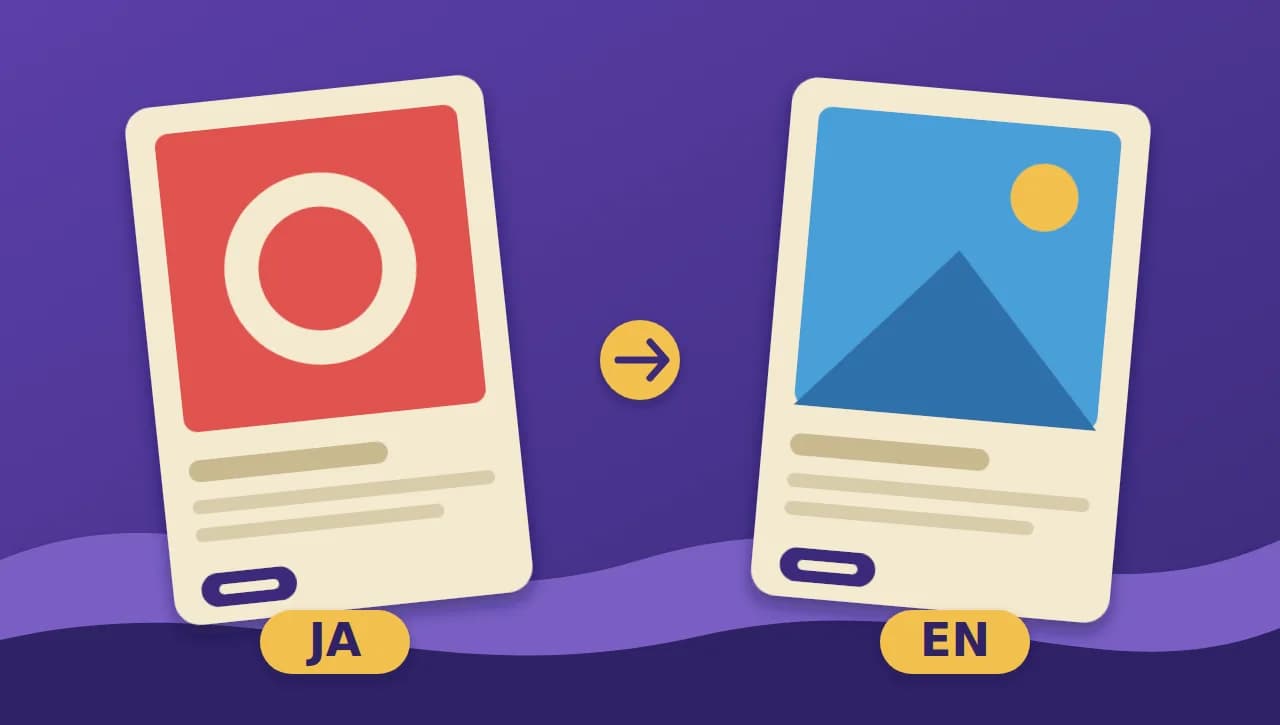
Key takeaways
- The same artwork can exist in both languages, but the cards are not the same product.
- Sets, numbering and rarity labels often differ between Japanese and English.
- Write the language next to every card so you never mix up two versions.
- Prices differ by language, not only by condition.
You may have a Japanese card from a cousin, a trip or a swap. It looks like a card you know, with words you cannot read. This guide is general collector knowledge: what usually changes, and how to keep both kinds tidy.
What changes
Japanese cards
Text in Japanese. Released in Japanese sets with their own codes. Rarity labels may differ.
English cards
Text in English. Released in English sets with their own codes. Names and card lists may be grouped differently.
Reading a Japanese card
You do not need to read Japanese to tell cards apart. Look at the parts that look the same on both: the HP number, the energy symbols, the attack costs and the number at the bottom. The artwork helps you match a card, but check the number too.
Numbering and sets
Japanese sets have their own codes, and a Japanese set can have a different card list or size than the English set of a similar theme. Rarity labels can differ from the shapes you know. See "Set codes and numbers".
Prices and demand
Each language has its own market, so one price does not carry over to the other. Reasons include how many were printed, who wants them and where they are sold. A Japanese card is not better or worse by itself: it is a different version. Read "How Pokémon Card Prices Work" for how to read any price.
Logging both
Write the language next to every card
In a spreadsheet, a binder label or an app, always add the language.
Keep versions apart
Do not count a Japanese copy and an English copy as ×2 of one card.
Use the set code and number
They tell the versions apart better than the name does.